

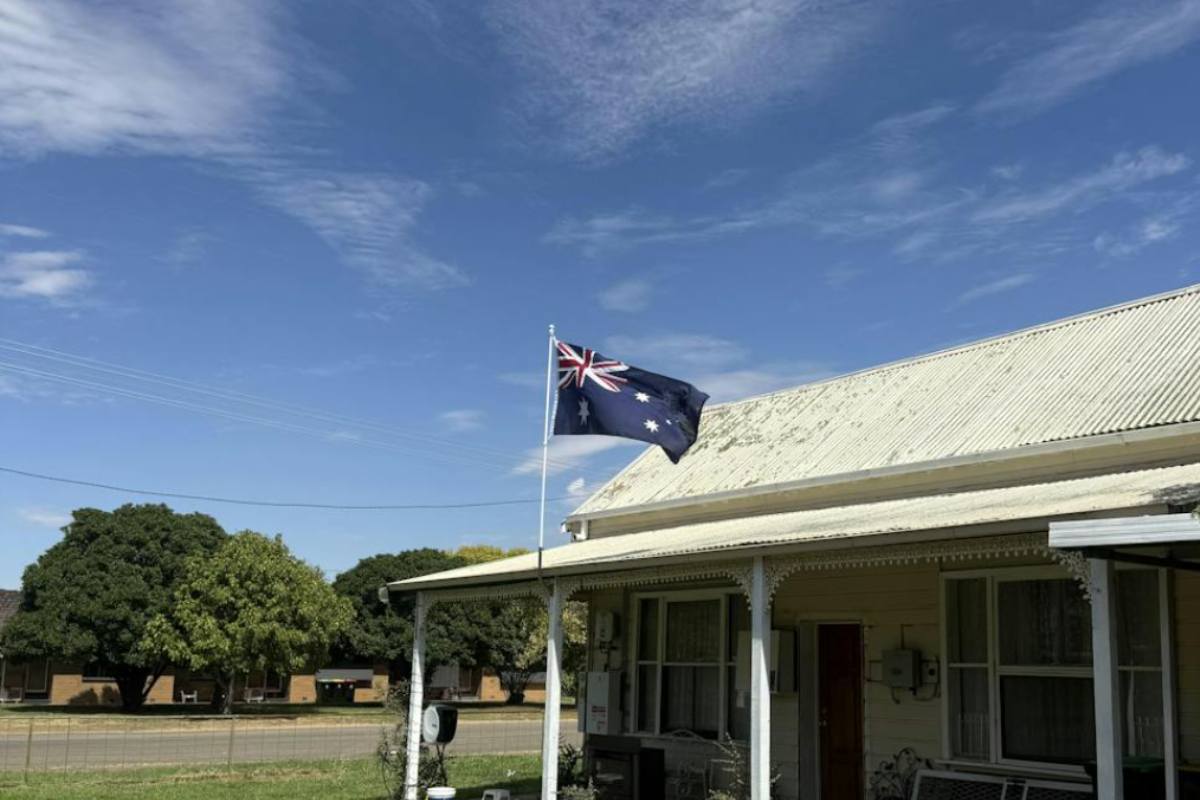
Australian National Flag Day is observed every year on 3 September. In 2026, it falls on Thursday, 3 September and marks 125 years since the Australian flag was first officially flown.
This day many homes, schools, businesses, councils and community groups fly or display the Australian flag with pride and learn about its design was chosen and reflect on what this national symbol represents. The Australian Government’s National Flag Day guidance encourages Australians to take part through flag-raising ceremonies, public displays and education about the flag’s history and protocols.
Australian National Flag Day at a Glance
|
Key fact |
Details |
|
Date |
3 September every year |
|
Date in 2026 |
Thursday, 3 September 2026 |
|
What it marks |
The first official flying of the Australian flag in 1901 |
|
First flying |
Exhibition Building in Melbourne |
|
Officially proclaimed |
28 August 1996 |
|
Anniversary in 2026 |
125 years since the first official flying |
Why is Australian National Flag Day on 3 September?
The date goes back to 3 September 1901, eight months after the six colonies federated to form the Commonwealth of Australia.
Australia’s first Prime Minister, Edmund Barton, announced the winners of a competition to design a flag for the new nation. A large blue flag measuring 5.5 metres by 11 metres was then flown above the dome of the Exhibition Building in Melbourne. It was known at the time as the Commonwealth blue ensign and later became known as the Australian National Flag.
The design did not come from one person. According to the Australian Government’s history of the Australian National Flag, the competition received 32,823 entries. Five almost identical designs shared first place:
- Annie Dorrington from Perth
- Ivor Evans, a 14-year-old student from Melbourne
- Leslie Hawkins from Leichhardt in New South Wales
- Egbert Nuttall from Prahran in Victoria
- William Stevens, a ship’s officer from New Zealand
Their ideas were combined to create the Commonwealth blue ensign. This public competition is an important part of the Flag Day story because Australians of different ages and backgrounds helped shape the new national symbol.
Was the flag flown in 1901 exactly the same as today’s flag?
Not quite. The Commonwealth Star on the 1901 design had six points, one for each state. A seventh point was added in 1908 to represent Australia’s territories.
The Southern Cross also changed. The original competition design used different numbers of points to reflect the brightness of its stars. The official 1903 design simplified this to four larger seven-pointed stars and one smaller five-pointed star.
How National Flag Day became an Official Observance
The first flying took place in 1901, but Australian National Flag Day was established much later.
- 1901: The winning flag design was announced and the flag was officially flown for the first time in Melbourne.
- 1984: Vexillographer and historian John Christian Vaughan organised a National Flag Day ceremony with the NSW branch of the Australian National Flag Association in Hyde Park, Sydney.
- 1996: Governor-General Sir William Deane formally proclaimed 3 September as Australian National Flag Day.
- Today: Australians are encouraged to fly or display the flag each year at homes, schools, workplaces, council buildings and community venues.
The Australian National Flag Association’s history of National Flag Day records how Vaughan continued promoting the idea through public ceremonies and media appearances before the 1996 proclamation.
What Do the Symbols on the Australian Flag Mean?
The Australian National Flag has three main elements. Together, they connect Australia’s history, federal system and place in the Southern Hemisphere.
- The Union Jack appears in the upper-left corner and acknowledges the history of British settlement in Australia.
- The Commonwealth Star, also called the Federation Star, has seven points. Six represent the states and the seventh represents Australia’s territory.
- The Southern Cross represents the well-known constellation visible in the Southern Hemisphere. The flag shows four larger seven-pointed stars and one smaller five-pointed star.
These are the three elements defined in the Australian Government’s official guidance on the Australian National Flag.
How to Celebrate Australian National Flag Day

You do not need a large event to take part. A respectful display and a short conversation about the flag’s history can give the day meaning.
At home
Fly the flag from a suitable flagpole from first light until dusk. Display it correctly on a wall, balcony or inside a front window if you do not have a flagpole.
Share one or two Flag Day facts with family members, such as the five winning designers or the original 1901 flag size.
Check the flag before the day and replace it if it is badly faded, torn or damaged.
At school
Hold a short student-led flag-raising ceremony. Ask students to research one of the five winning designers. Compare the six-pointed Commonwealth Star of 1901 with today’s seven-pointed star. Use an accurate flag outline for a colouring or design activity with younger students. Invite students to explain what the Union Jack, Commonwealth Star and Southern Cross represent.
At work or in a community organisation
Fly the flag outside the building or display it in a foyer, reception area or meeting room. Begin the day with a brief explanation of why 3 September was chosen. Invite staff, members or local students to take part in a simple ceremony. Share official Flag Day resources through an internal email, noticeboard or community newsletter.
The Australian Government specifically suggests indoor displays for businesses and organisations without a flagpole, so a public-facing foyer or reception can be a suitable alternative.
A Simple Australian National Flag Day Ceremony
A ceremony can be brief and still feel respectful. The following practical order can be used by a school, workplace, council, club or community group:
- Prepare the flag and flagpole. Check that the flag is clean and undamaged, the rope is secure and the flag can fly freely without touching nearby objects.
- Welcome everyone. Explain that 3 September marks the first official flying of the flag in 1901.
- Invite attendees to face the flag. Those present should remain silent while it is raised. People in uniform should salute.
- Raise the flag briskly. Fly it freely and as close as possible to the top of the pole.
- Add a short reading or activity. A student presentation, historical fact, community reflection or the Australian National Anthem may be included if appropriate.
- Close the event. Thank attendees and explain when the flag will be lowered. At the end of the day, lower it ceremoniously before dusk unless it will remain properly illuminated.
Flag Protocol to Remember on 3 September
The Australian flag can be flown on any day of the year, but the correct protocol still applies on National Flag Day.
- Raise the flag briskly and lower it ceremoniously.
- Do not raise it before first light or lower it after dusk.
- Only leave the flag flying at night when it is illuminated.
- Keep it flying freely and as close as possible to the top of the flagpole.
- Raise the Australian National Flag first and lower it last when it is flown with other flags, unless all flags are raised and lowered at the same time.
- Do not fly a flag that is damaged, badly faded or dilapidated.
- Do not allow the flag to fall or lie on the ground.
- Do not fly two flags from the same flagpole.
For practical examples covering wall displays, multiple flagpoles, night display and half-mast use, read our guide to Australian National Flag protocols and etiquette.
Get Your Flag Ready Before 3 September
Before Flag Day, inspect the fly end, hems, corners, colours and attachment points. Official guidance says a damaged, faded or dilapidated flag should not be flown.
If your current flag needs replacing, The Flag Men’s fully sewn Australian flag in 1800 x 900mm is made with 160gsm polyester, double-stitched hems, reinforced corners and appliquéd stars and Union Jack. It includes anti noise flagpole clips and is sized for a 6-metre flagpole or a wall mounted flagpole kit.
Preparing early gives you time to check the flag, practise the ceremony and make sure your display is ready for Thursday, 3 September 2026.


