

The New Zealand flag is the official national flag for the people of New Zealand. Statutorily, it stands as "the symbol of the Realm, Government, and people of New Zealand". This current flag features a royal blue field with the Union Jack in the first quarter, balanced by four five-pointed red stars with white borders on the fly. These stars represent the Southern Cross constellation over the South Pacific Ocean.
So, why do some locals want to change the current flag of New Zealand? Many New Zealanders believe the look is outdated. Yet others argue that the design represents something else. It shows their strong past and present ties to the United Kingdom and its history.
What Was the First Flag of New Zealand?
The Trade Crisis of 1830
Early Māori did not traditionally use flags, but they often tied woven cloth to their trading ships. This custom changed fast when Sydney customs officials seized a local trading ship in 1830. The vessel was named the Sir George Murray, built at Horeke in the Hokianga with prominent northern chiefs on board. Australia followed strict British navigation laws that required every merchant ship to carry a nationality certificate.
At the time, New Zealand was not a British colony and existed outside formal British jurisdiction. Without an officially recognised flag or registration system, locally built trading ships faced legal and commercial difficulties when entering overseas ports. Northern chiefs quickly recognised the need for an internationally recognised symbol that could support trade and maritime recognition.
Busby’s Plan for a Unified Government
The British Crown appointed British Resident James Busby to look after local affairs. Busby arrived in the islands in 1833 as the official British representative. He lacked military troops to enforce laws, so he relied entirely on diplomatic cooperation with the local people. He quickly realised that the trade crisis was a great chance to bring the tribes together.
Busby wanted to encourage the northern Māori chiefs to work collectively. He hoped a shared flag would pave the way for them to build a collective government. To start this plan, Australian authorities first suggested a plain blue and white flag. Busby rejected this layout straight away because it lacked the crucial colour red.
Red was a vital taonga colour for Māori that signalled high social rank and mana to the chiefs. To the leaders, mana meant absolute sovereign authority and sacred status. They viewed a new flag as a sacred extension of their own power. It would show the world that British rulers recognised their independent leadership.
The Meeting at Waitangi in March 1834
Busby used his official status to call a grand assembly at Waitangi. Twenty-five powerful northern chiefs gathered directly at his personal residence on 20 March 1834. A large crowd of settlers, church workers, and international ship commanders came to watch. In fact, ten British and three American ship captains stood by as official witnesses to the historic vote.
Missionary Henry Williams, a trusted figure from the influential Church Missionary Society, helped run the crucial meeting. Williams drew up three flags for the gathered chiefs to review. As the leaders voted to choose their preferred design, the son of a northern chief carefully recorded each individual tally.
The winning layout secured 12 votes from the chiefs, while the other choices received ten and three votes. This specific design became the official flag of the United Tribes of New Zealand, serving as New Zealand's first national symbol. King William IV later formally recognised the chosen flag, demonstrating British acknowledgement of the authority of the northern chiefs and their trading vessels. Busby marked the occasion with a 21 gun salute from HMS Alligator. The event represented an important step toward recognising collective Māori leadership in the north.

Greentubing, CC BY-SA 2.5, via Wikimedia Commons
How the Union Jack Became the Official Flag
The Transition From the Flag of the United Tribes
Everything changed on 6 February 1840 with the signing of the Treaty of Waitangi. The agreement marked a major turning point in New Zealand’s political and constitutional history. As British authority expanded, the Union Jack became the principal flag used by the colonial government. Lieutenant Governor William Hobson reinforced this transition by replacing the Flag of the United Tribes in official settings.
Hobson soon faced a challenge in Wellington, where settlers associated with the New Zealand Company attempted to establish their own governing arrangements. These actions created tension with Crown authority because colonial officials viewed them as operating beyond recognised legal structures. The settlement also continued using the 1834 flag during this uncertain political period.
Hobson viewed this corporate defiance as a direct challenge to the Crown. In May 1840, he sent a small armed force to Port Nicholson. His troops forcefully hauled down the settlement's unauthorised flag. This military move firmly established the British Union Flag as the sole legal authority.
Māori Resistance to the Union Jack
The new flag quickly sparked intense geopolitical friction across the country. Many Māori chiefs believed they kept the right to fly their own flag. They fully expected an equal partnership with the British Crown under the treaty. However, the colonial government continually asserted complete dominance over indigenous leadership.
Ngāpuhi chief Hōne Heke became one of the most prominent Māori figures to resist growing British authority. He viewed the Union Jack and the flagstaff at Kororāreka as symbols of expanding Crown control and a decline in chiefly independence. For Heke, the issue reflected wider concerns about sovereignty, trade, and political power. Between 1844 and 1845, he famously cut down the Kororāreka flagstaff four times in protest.
Defiance also emerged among southern iwi (tribes) during this turbulent period. Ngāi Tahu chief Tūhawhaiki launched a brilliant tactical move in the 1840s. He defiantly hoisted the original 1834 flag on Ruapuke Island in Foveaux Strait. Tūhawhaiki used the emblem to prove his lands remained free from Crown control.
Despite continued resistance in some communities, the Union Jack remained widely used throughout New Zealand during the colonial period. Under official imperial protocol, it held status as the superior flag and symbolised the country's close ties to Britain. This arrangement remained in place until 1965, reflecting New Zealand’s long constitutional relationship with the British Empire.
The Maritime Evolution of the Blue Ensign
How the Code Signals Flag of 1869 Changed Everything
The origins of the modern New Zealand flag are closely linked to maritime administration and colonial naval policy. During the New Zealand Wars (1845–1872), the colonial government acquired its own armed steamships. As colonies expanded their maritime operations, the British government sought to maintain a coordinated imperial naval structure. This led to the passing of the Colonial Naval Defence Act 1865, which standardised how colonial vessels operated within the wider British system.
This new imperial law forced all colonial government ships to fly a modified blue ensign. The British rules required each territory to include a unique badge of the colony. In 1866, visiting British warships officially reprimanded the New Zealand government steamers St Kilda and Sturt. They were caught flying a plain blue ensign without any distinguishing badge.
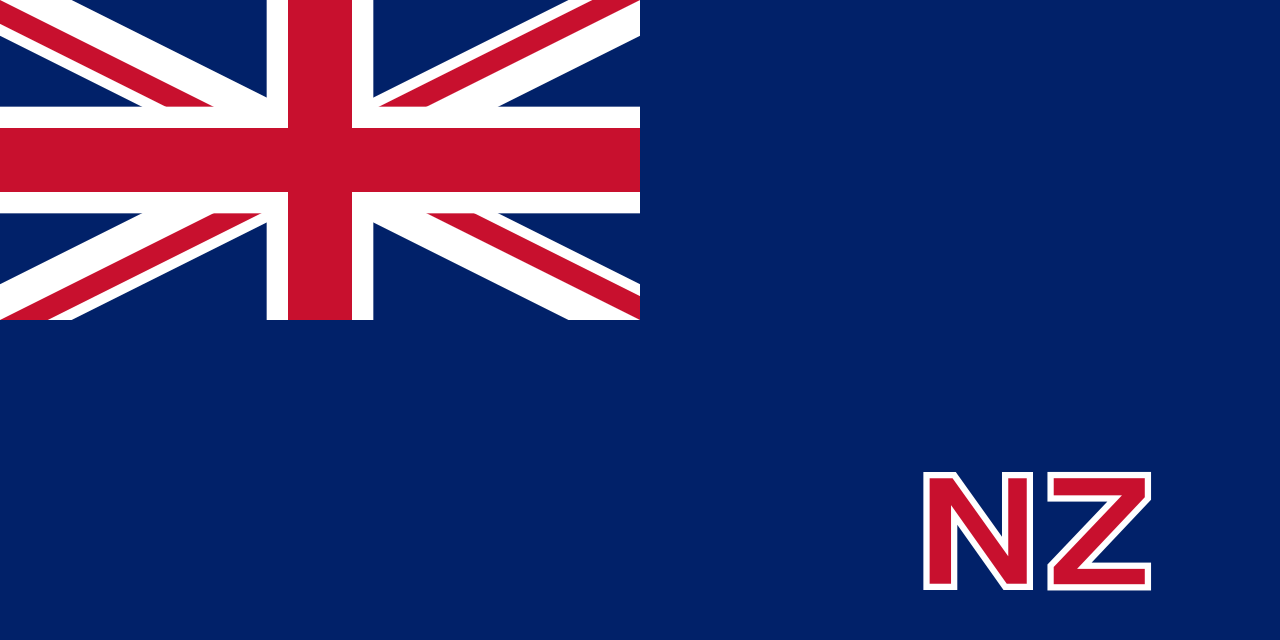
New Zealand completely lacked an official coat of arms or seal back then. Governor George Grey quickly created a temporary fix in January 1867. The red letters NZ with white borders were officially added to the blue ensign. Local politicians widely disliked this text design, calling it ugly and highly uninspiring.

Benchill, Public domain, via Wikimedia Commons
A major visual redesign arrived soon after in 1869. Governor Sir George Bowen asked Royal Navy officer Albert Hastings Markham for a better alternative. Markham replaced the clunky text with four stars representing the Southern Cross constellation. These four five-pointed red stars had distinct red stars with white borders to match the colours of the Union Jack.

Bowen officially approved this elegant maritime layout on 23 October 1869. However, its legal use was strictly limited to government ships at sea. Further confusion occurred when an 1899 international code flag altered the look. This new design awkwardly placed the four stars inside a solid white disc.
The revised signalling design attracted strong criticism during parliamentary debate. Some politicians used unusually colourful language and compared its appearance to a Hennessy brandy capsule because of the large white disc surrounding the stars. Despite the criticism, this version of the flag still gained visibility and appeared on public buildings and commercial materials.
Making the National Flag Legal in 1902
Premier Seddon and the New Zealand Ensign Act
The outbreak of the South African War in 1899 triggered intense imperial patriotism. However, the massive public confusion surrounding the current flag deeply embarrassed Premier Richard Seddon. Citizens frequently used the unofficial white disc signalling flag on shore. Seddon decided to make the traditional blue flag with the Southern Cross completely legal.
Premier Seddon introduced the New Zealand Ensign Bill in 1900. The bill quickly hit a major roadblock with Acting Governor Sir Robert Stout. Stout believed the bill illegally cut across the constitutional rights of the Governor. Seddon completely refused to alter the clause, sparking a major political standoff.
The British Admiralty also objected heavily to the first draft. They disliked using the blue ensign for all general commercial purposes. In the United Kingdom, this unique privilege was strictly reserved for government ships. They feared the new New Zealand law would water down this elite naval distinction.
New Zealand politicians quickly modified the bill to restrict sea usage. The House successfully passed the updated New Zealand Ensign Bill in November 1901. King Edward VII officially approved it by royal signature on 24 March 1902. This historic statute finally established the official national flag of New Zealand.
After becoming the official national flag in 1902, the New Zealand flag gradually became more visible in military and public life. During the First and Second World Wars, it increasingly appeared alongside New Zealand forces and naval vessels, helping strengthen its identity as a national symbol.
A technical description of the flag appeared in the Gazette in June 1902. These core statutory provisions remained completely unchanged for many decades. They were later locked into the modern Flags, Emblems, and Names Protection Act 1981. Today, this specific law still governs the usage of all official flags.
What are the Meanings of the Colours and Symbols on the New Zealand Flag?
Stars of the Southern Cross and the Blue Field Meaning
Every symbol on the flag holds a specific, dual historical meaning. According to the Ministry for Culture and Heritage, the colours reflect both geography and historical tradition. The royal blue background represents the sea and sky surrounding New Zealand while also drawing influence from the British Blue Ensign tradition that shaped many colonial flags.
The prominent Union Jack reflects the country's origins as a British colony. It combines three historic heraldic crosses in the upper hoist corner. This design represents strong past and present ties to the United Kingdom.
The stars of the Southern Cross emphasise New Zealand's location. They signify this country's distinct place in the South Pacific Ocean. For Māori, these four stars hold a deep traditional meaning. In mythology, the constellation is widely identified as Māhutonga.
Māhutonga is a sacred aperture in Te Ikaroa, the Milky Way. Traditional myth states that storm winds escaped through this opening. The official colour specs are Pantone 186 C and Pantone 280 C.
Who Made the Flag First, Australia or New Zealand?
Design Timeline: The New Zealand Flag vs. The Australian Flag
Many travellers confuse the two flags because they look incredibly similar. Chronologically, New Zealand created its iconic design first. Albert Hastings Markham designed the basic New Zealand layout back in 1869. The country then officially adopted this specific look in 1902.
Australia did not adopt its official national flag until significantly later. Australia chose its look through a massive public design competition in 1901. However, King Edward VII did not officially approve the design until 1903. This clear timeline proves New Zealand had the flag design first.

The modern Australian flag features five white stars for the Southern Cross constellation. It also includes a large white seven-pointed Commonwealth Star beneath the canton. The New Zealand flag uses four five-pointed red stars. These unique red stars with white borders cause frequent international confusion.
The Public's Choice on the Flag (2015–2016)
Coming back to the point we had in the beginning: why do some locals want a change to the current flag? Many New Zealanders believe the look is outdated and overly colonial. However, others argue that the design represents their shared history. This deep disagreement created massive tension across the country.
Proposed Alternative Flags and the Referendum in 2015
This cultural friction eventually led to two official design referendums. The government held the first nationwide public vote in late 2015. A panel selected five final alternative designs for the ballot. The winning design was a blue and black flag featuring a silver fern.
The selection process triggered intense public backlash online. A massive grassroots digital campaign fought for a geometric option named "Red Peak." Activists used social media to bypass the official selection panel. They successfully forced a special legislative amendment to add it to the ballot.

glasnevinz, CC BY-SA 2.0, via Wikimedia Commons
Why New Zealanders Voted to Keep the Current Flag in 2016
The final head-to-head vote occurred in March 2016. Voters chose between the traditional flag and the silver fern design. Over 56 percent of the country voted to keep the historic banner. Therefore, the traditional design remains the official symbol of the realm.
Public opposition played an important role in the referendum result. Several organisations, veterans, and public figures argued that the existing flag reflected military history and national identity. Others questioned the cost and purpose of changing a symbol that many New Zealanders already strongly identified with.
The traditional flag remained the official supreme symbol after the vote. However, dual-flag diplomacy soon evolved to reflect modern New Zealand identity. The government formally recognised the Māori national flag, known as Tino Rangatiratanga. Since 2010, both flags fly together on key government buildings every Waitangi Day.
Frequently Asked Questions
Why does the New Zealand flag have four stars instead of five?
The Southern Cross constellation contains additional visible stars, but the New Zealand flag uses four prominent stars in its design. This simplified arrangement creates a cleaner and more recognisable appearance while still representing New Zealand’s location in the South Pacific.
Who designed the alternative Silver Fern flag in the 2015 referendum?
Architectural designer Kyle Lockwood created the famous silver fern flag design. His blue, black, and white design won the initial public referendum. Interestingly, Lockwood actually had two separate designs make the official top five shortlist. Another designer named Aaron Dustin engineered the geometric "Red Peak" alternative.
Where can I buy a fully sewn New Zealand flag?
You can buy a premium 1800 x 900mm New Zealand Flag directly from our online store. We at The Flag Men are proud to deliver quality sewn flags. A fully sewn flag uses individual panels of premium woven fabric that are cut and meticulously stitched together to construct the design.


