

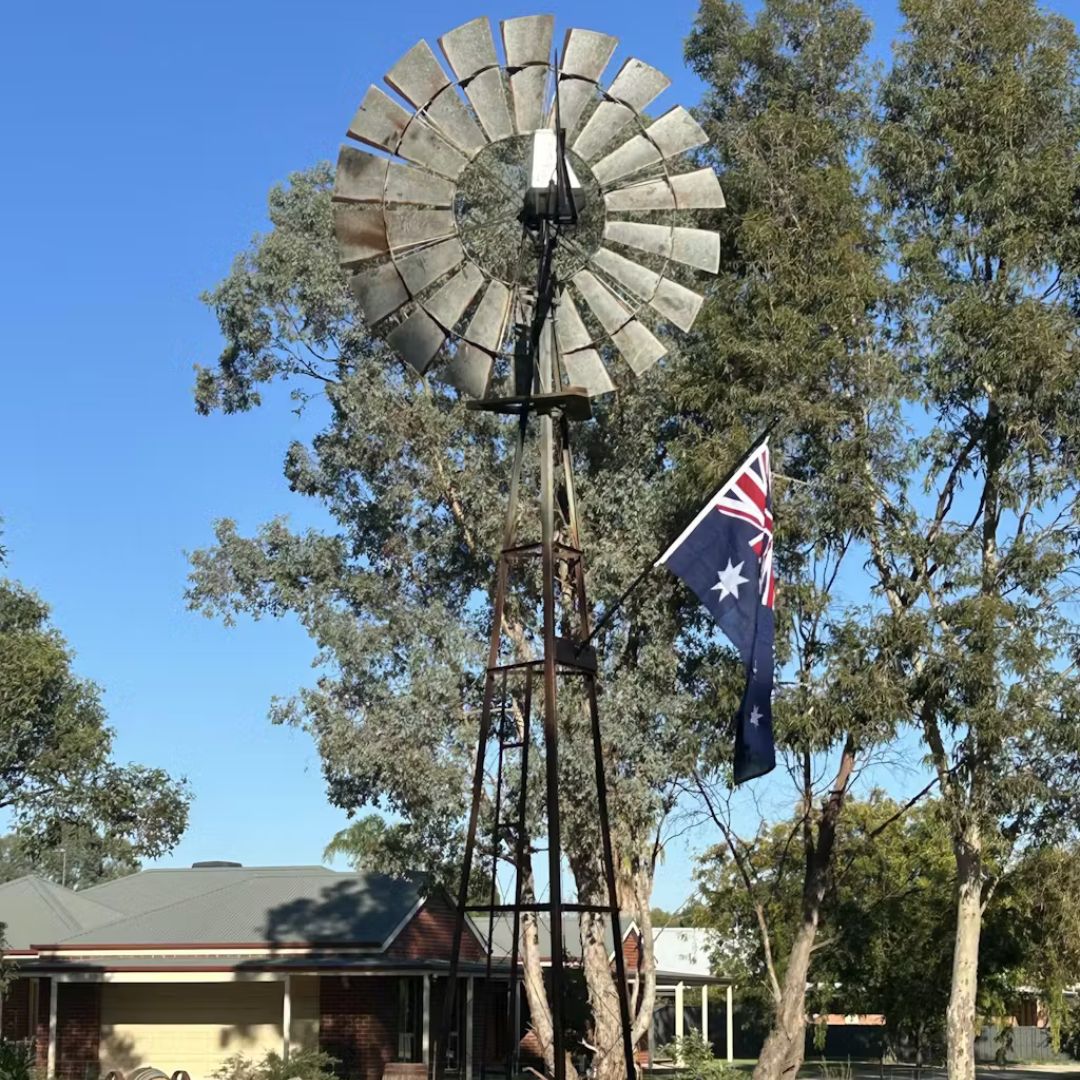
Printed flags are useful when you need a custom logo, detailed artwork, a short-term event flag, or a budget-friendly option. Fully sewn flags are different. They are usually the better choice when the flag itself matters, especially for an Australian flag flown on a flagpole outside a home, school, RSL, club, office, workshop, or community space.
At The Flag Men, we focus on fully sewn flags, not printed flags. So this guide is not pretending both options are the same. A printed flag can be the right choice for some jobs. But if you want a quality Australian flag with real stitching, stronger visual presence, and a more substantial finish, fully sewn construction is worth understanding before you buy.

Fully Sewn vs Printed Flags: What Is the Real Difference?
The real difference is how the flag is made.
A printed flag usually starts as one piece of fabric. The design is printed onto the surface using a printing process suited to fabric. This works well when the design has a logo, gradient, fine detail, or artwork that would be hard to sew.
A fully sewn flag is built differently. The fabric pieces are cut, placed, sewn, and stitched into the final flag design. On a fully sewn Australian flag, this includes details such as the Union Jack, Federation Star, and Southern Cross.
This is where appliqué matters. Appliqué means one piece of fabric is sewn onto another piece of fabric to create the design. So instead of printing a star onto the flag, the star is made from fabric and stitched into place.
That is why fully sewn flags have a more traditional appearance. You can see the stitching. You can feel the fabric layers. The flag has more depth than a flat printed design.
This also changes how the design ages. A printed flag can lose visual sharpness as the printed surface fades or wears. A fully sewn flag can still fade in sun, wind, and weather, but the design is made from coloured fabric panels sewn together, not only from printed colour on one surface.
When Should You Choose Printed, and When Should You Choose Fully Sewn?
If you need a custom printed flag with a logo, gradient, small text, sponsor artwork, or detailed graphics, printing usually gives more design freedom. The artwork can be reproduced across the fabric without needing every shape to be cut and stitched by hand.
Printed flags are also practical for short-term events. If the flag is only needed for a promotion, market stall, school fair, community event, or temporary display, a printed flag may be the more budget-friendly option.
A fully sewn flag is usually the better choice when the flag itself is the main feature. In that setting, the flag is not just a background item. It is meant to be seen, respected, and displayed properly.
Fully sewn flags suit homes, schools, RSLs, clubs, councils, offices, workshops, and community spaces where appearance matters. The stitching, fabric layers, and appliquéd details give the flag a more traditional finish than a printed flag.
The simplest way to decide is this: if the design is the product, a printed flag may make more sense. If the flag itself is the product, a fully sewn flag is usually the stronger choice.

What Are Polyknitted Flags?
Polyknitted flags are flags made from knitted polyester fabric.
“Poly” means polyester. “Knitted” refers to the way the fabric is formed. Instead of a tighter woven structure, knitted polyester is made with looped fibres. This usually gives the fabric a lighter and more flexible feel.
In the flag industry, polyknitted fabric is often used for printed flags. It can work well when the design has a logo, fine artwork, gradients, or bright colours. This makes it a practical option for custom printed flags, event flags, sponsor flags, and short-term displays.
Fully Sewn Flags vs Printed Flags: Quick Comparison Table
| Decision factor | Fully sewn flag | Printed flag | Better choice |
|---|---|---|---|
| Main construction | Separate fabric pieces sewn and stitched together | Design printed onto fabric | Fully sewn for traditional flag display |
| Best use | National flags, flagpoles, homes, schools, RSLs, clubs, councils | Logos, events, sponsor flags, detailed artwork | Depends on purpose |
| Appearance | Textured, traditional, substantial | Flat, clean, often vibrant | Fully sewn for premium appearance |
| Design detail | Good for bold national flag elements | Better for gradients, logos, and intricate designs | Printed for complex artwork |
| Fabric | Often woven polyester or heavy-duty outdoor fabric, depending on product | Often knitted polyester or other printable fabric | Check product specification |
| Outdoor stress points | Hoist edge, corners, hems, stitching, clips, halyard area | Fabric edges, print surface, hems, clips | Fully sewn for durability |
| Cost | Higher | Usually lower | Printed for tight budgets |
| Value | Better when the flag itself is the feature | Better when the design or event is the feature | Match the flag to the job |
| Limitation | Not ideal for photo-style artwork or very complex logos | Less traditional finish for national flags | Choose based on use |
The Failure Point Is Usually Not the Middle of the Flag
Most people judge a flag by looking at the middle. They notice the colour, the stars, the Union Jack, the logo, or the design. That makes sense, because this is the part of the flag people see first. But in real outdoor use, the middle of the flag is usually not the part doing the hardest work.
The stress points are normally around the hoist side, clips, corners, hems, stitching, and the area closest to the halyard. These are the parts that take the pull when the flag is raised, lowered, clipped, and moved by wind. This is why construction matters.
On a printed flag, the design may look sharp when new, but the flag still depends on the fabric, print surface, edge finishing, and attachment points. On a fully sewn flag, the design is built from fabric panels, stitching, and appliquéd details. The flag still needs care, but the construction gives it a more substantial structure.
Before buying a flag for outdoor use, do not only look at the front design. Check the parts that will do the work. Look at the hoist side. Check the clips. Look at the corners. Check the hems. Look at the stitching. If the flag will be flown on a flagpole, these details matter more than many buyers realise.
How often the flag is flown also matters. A flag flown 24/7 will wear faster than a flag flown only during the day or on special occasions. If the flag is left out during strong wind, heavy rain, or rough weather, that can shorten its usable life too.
The best habit is to inspect the flag regularly. If the flag looks badly faded, torn, frayed, or damaged, it is time to replace it. Australian flag protocol says a damaged, faded, or dilapidated Australian flag should not be flown. For more information we also provide a guide about the flag etiquette.

Frequently Asked Questions
Are printed flags bad quality?
No. A printed flag is not automatically poor quality. Printed flags are made for a different job. They can be a good choice for custom logos, sponsor artwork, intricate designs, gradients, event branding, and short-term displays.
The key is to choose the flag for the right use. If the design is complex, printing often makes sense. If the flag itself needs to look traditional, substantial, and suited to a flagpole, fully sewn is usually the stronger option.
Is a fully sewn Australian flag worth the extra cost?
Yes, if the flag will be flown regularly or displayed somewhere the finish matters. A fully sewn Australian flag is worth considering for a home, school, RSL, club, council, office, workshop, or community space. These are places where the flag is not just decoration. It is part of the setting.
The extra value comes from the fabric panels, stitching, appliquéd detail, reinforced finishing, and more traditional appearance. It is not the cheapest option, but it is often the better choice when presentation and durability matters.
Does polyknitted fabric mean a flag is low quality?
No. Polyknitted fabric does not automatically mean low quality. It means the flag is made from knitted polyester, which is often used for printed flags. This can be useful for event flags, logo flags, sponsor flags, and short-term displays where artwork and cost matter. It is simply a different option from woven polyester and fully sewn construction.


